

Sipalay’s Untouched Reef System: A Frontier Beneath the Waves
On the southwest coast of Negros Occidental lies Sipalay, a town that has always lived quietly by the sea. For years it was known mostly for its fishing villages and calm beaches, but lately divers have begun to speak of it with a different kind of reverence. Beneath its waters, they say, there are reefs that remain almost untouched, places where coral gardens bloom undisturbed and pelagic fish still patrol as if the world above has yet to intrude.
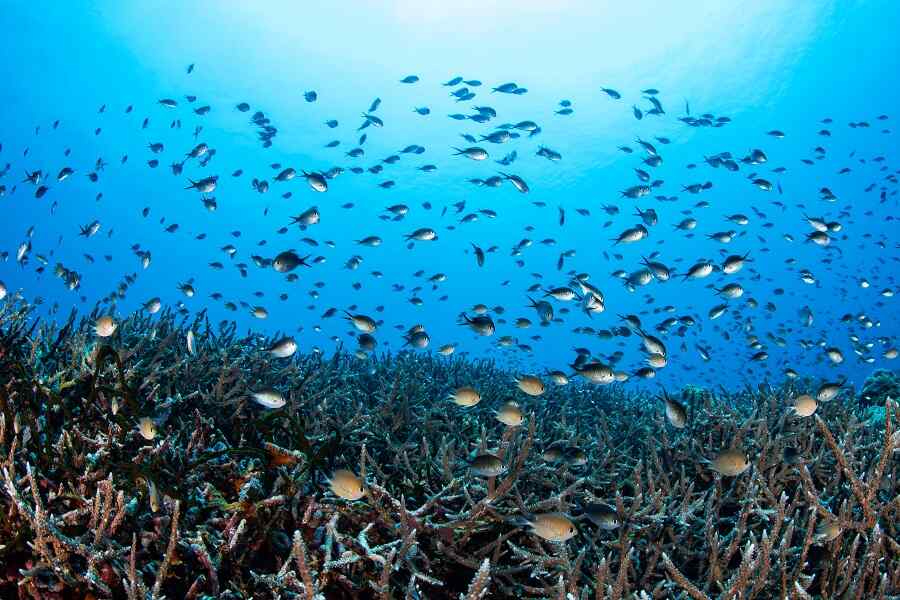
Earlier this year, new sites were charted just offshore. Among them, two names have already become part of local diving lore: Jonel’s Garden and G_A_P. They are close enough to reach within minutes, yet they feel like frontiers, offering divers the thrill of discovery in waters that remain largely unexplored.
At around twenty metres down, Jonel’s Garden opens like a submerged meadow. Coral formations rise from the seabed, layered with wide plates that catch the light in shifting shades of green and gold. Swim‑throughs lead into pockets where snappers flicker past, pygmy seahorses cling to branches, and nudibranchs add flashes of colour. It is a place that feels alive in every corner, a reminder of what reefs look like when left to themselves.
Deeper still, G.A.P. reveals itself as a cathedral of coral. Massive structures stand apart, separated by wide spaces that give the site its name. A wave‑shaped pinnacle rises from the seabed, its curves echoing the motion of the sea above. Here the encounters are larger. Giant trevally sweep past in silver arcs, emperors and groupers lurk in the shadows, and green turtles glide through as if on patrol. The presence of such predators is rare in many parts of Southeast Asia, a sign that Sipalay’s reefs remain balanced and resilient.
Sipalay’s underwater story stretches further. Campomanes Bay holds wartime wrecks resting in calm waters that make them accessible to divers of varying levels. Nearby, Danjugan Island Marine Reserve has been protected for decades, its beaches serving as nesting grounds for turtles and its reefs teeming with fish. Together, these places form a mosaic of experiences, from coral gardens to wrecks and reserves, all within reach of a small coastal town.
What makes Sipalay stand out is not only what has been found but how it is being approached. Access is kept controlled, dives are guided, and reef etiquette is enforced. The philosophy is simple. Discovery should not come at the cost of destruction. In a region where reefs are often under pressure, Sipalay offers a glimpse of what careful stewardship can achieve.
Challenges remain. Sites like G.A.P. demand advanced skills, with currents and depth adding complexity. Infrastructure in town is modest, and the ecosystem is fragile. Yet perhaps that is part of the appeal. Sipalay is not polished, it is not crowded, and it is not compromised.
For divers, Sipalay is a frontier, a place where exploration still feels possible. For conservationists, it is a case study in how low‑impact tourism can preserve biodiversity. And for the Philippines, it is proof that even now there are corners of the sea that remain largely unknown.
In Sipalay, discovery and conservation are not opposites. They are partners, shaping a future where reefs can thrive and divers can still feel the thrill of finding something untouched. Beneath the waves, stories are waiting to be told, and Sipalay is just beginning to share its own.
 By Kurtis Lee