

Angkor Wat: Rediscovered in Stillness
There are places in the world that feel eternal, and Angkor Wat is one of them. Yet even the most timeless sites change with the rhythm of travellers. For years, sunrise at Angkor meant jostling for space on the western causeway, cameras raised, voices murmuring as the towers emerged from the dark. But this season something remarkable has happened. Quiet.
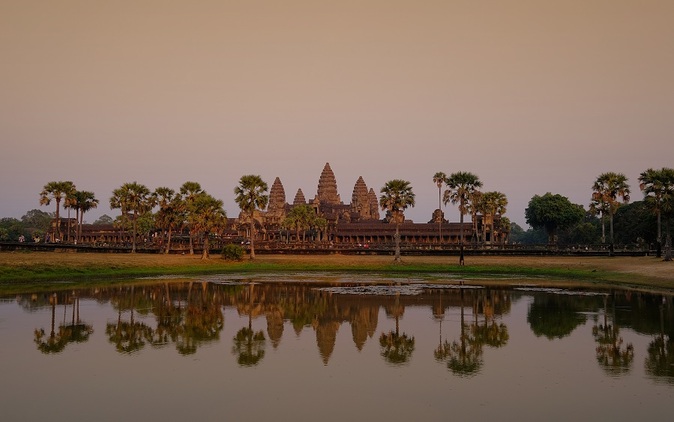
Arriving before dawn, visitors now find themselves alone with the temple. The moat lies still, the towers rise in silence, and the lotus blooms across balustrades and ponds without interruption. It feels less like sightseeing and more like stepping into a memory. Angkor as it might have been centuries ago, unhurried and sacred.
The journey unfolds gently. After sunrise, the path leads to Sras Srang, the royal bathing pool, where reflections ripple across ancient stone. A picnic breakfast follows, simple yet profound in its setting. From there, travellers wander to Bayon Temple, its serene faces gazing outward from the heart of Angkor Thom, and then to Ta Prohm, where roots coil through walls in a slow embrace. Each stop is a reminder that Angkor is not just architecture, but a living story written in stone and nature.
As the day fades, the narrative shifts. At dusk, travellers drift to a nearby lotus farm, where the sacred flower reveals its many lives. By boat, they glide among blossoms glowing in the evening light. Local artisans share how lotus stems become silk, how seeds enrich Khmer cuisine, and how petals weave into rituals of wellness and spirituality. It is a cultural immersion that feels both intimate and expansive, connecting the temple’s carvings to the rhythms of daily life.
The evening closes with a feast inspired by royal tradition, each dish shaped by lotus and seasonal produce. It is not just dinner, but a continuation of the story. The flower that greeted the dawn now graces the table at night.
Between these experiences lies the comfort of a boutique stay, where mornings begin with Khmer inspired breakfasts and evenings invite reflection by the pool. Siem Reap’s town centre is only minutes away, yet the atmosphere remains one of retreat, a pause from the world outside.
What makes this moment extraordinary is not simply the itinerary, but the timing. Angkor Wat, one of the world’s great sacred sites, is offering solitude. The crowds have thinned, and those who come now discover a version of Angkor rarely seen. Spacious, contemplative, and deeply human.
It is a journey of contrasts. Sunrise solitude at a temple that has stood for centuries, and sunset immersion in a living culture shaped by the lotus. For travellers, it is more than a visit. It is an awakening. Angkor is not just a monument to the past, but a reminder of how stillness can transform the way we see, feel, and remember.
 By Kurtis Lee