

Ghosts, Colour and Community: Experiencing Phi Ta Khon
Thailand’s cultural calendar is rich with celebrations, but few are as distinctive or enigmatic as the Phi Ta Khon Festival. Held annually in Dan Sai, a small town in Loei province, this three‑day event is often described as the “Ghost Festival,” yet its meaning runs far deeper than its playful masks and exuberant parades suggest. It is a ritual that fuses Buddhist devotion, local folklore and community identity, creating a spectacle that is both joyous and profound.
A Festival Rooted in Storytelling
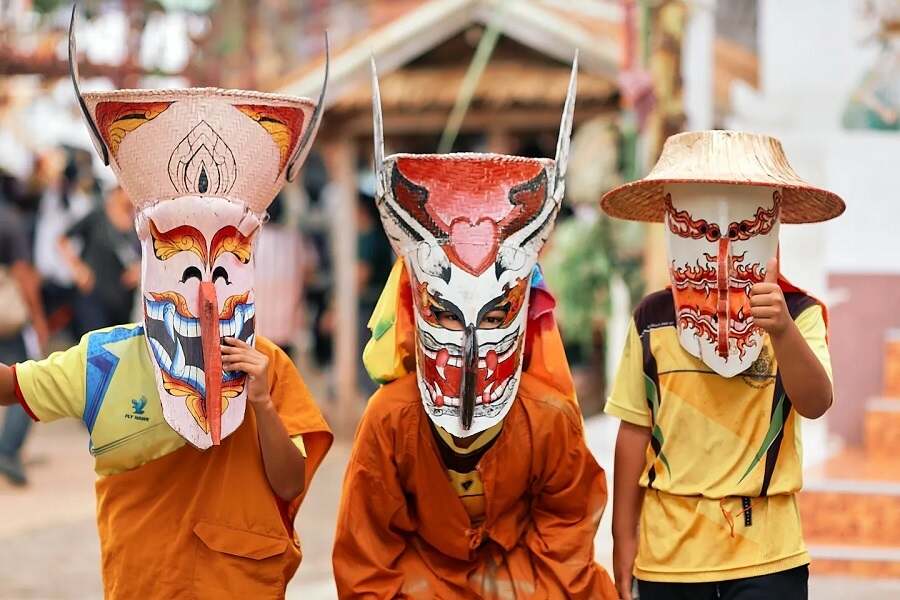
The origins of Phi Ta Khon lie in the Bun Luang merit‑making tradition, itself tied to the Buddhist tale of Prince Vessantara. According to the story, the prince’s return from exile was so momentous that spirits and forest beings joined the procession, disguising themselves in masks to celebrate. Over centuries, this narrative has been retold and reshaped, blending Buddhist teachings with animist beliefs and ancestral worship. What began as a local ritual has become a defining cultural marker for Dan Sai, passed down through generations.
The masks remain central to the festival’s identity. Crafted from palm leaf sheaths and rice baskets, they are painted in vivid colours with exaggerated features—bulging eyes, wide grins, elongated noses. They symbolise mischievous spirits, reminding participants of the unseen forces that shape life. Each mask is unique, often reflecting the personality of its maker, and together they create a kaleidoscope of imagery that is instantly recognisable.
Meaning and Symbolism
Phi Ta Khon is not simply a parade of costumes. It is a ritual of renewal, a reminder of impermanence and the cyclical nature of life. The spirits represented by the masks are playful but also cautionary, embodying the idea that joy and chaos coexist with order and reflection. The festival honours Phra U‑pakut, a protective river spirit, and reinforces the Buddhist principle that merit‑making and moral reflection are essential to community wellbeing.
At its heart, the festival is about connection. It brings together villagers, monks and visitors in a shared experience that blurs boundaries between the sacred and the secular. The exuberance of the parades is balanced by the solemnity of temple rituals, creating a rhythm that mirrors the balance of life itself.
The Three‑Day Ritual
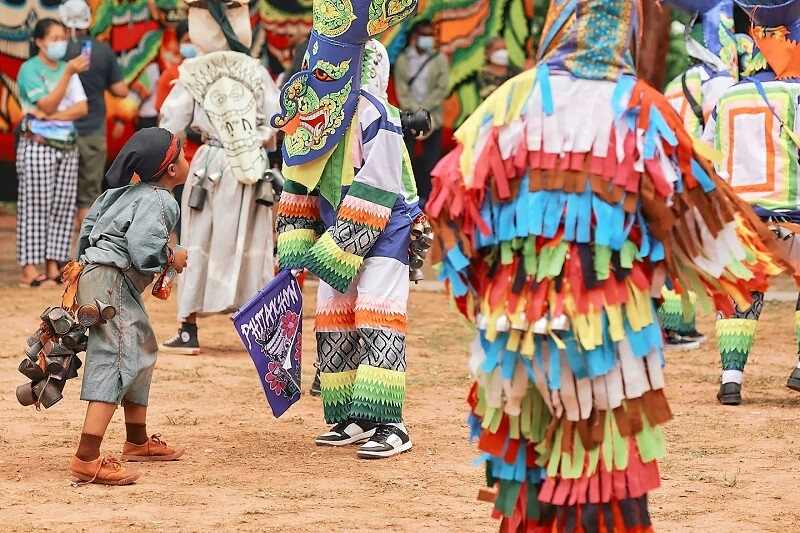
The structure of the festival is deliberate, unfolding across three days that each carry distinct meaning.
The opening day (Bun Luang Sermon) is marked by Buddhist ceremonies. Villagers gather at the temple to hear the Vessantara Jataka sermon, grounding the festival in spiritual reflection. It is a reminder that the celebrations are not merely entertainment but acts of devotion and merit‑making.
The second day (Processions and Play) is the most exuberant. Villagers don their ghost masks and costumes, parading through the streets with music, dancing and playful antics. Rockets are launched skyward in the Bun Bang Fai tradition, a ritual to encourage rainfall for crops. The atmosphere is chaotic, joyous and inclusive, with children, elders and visitors swept into the rhythm.
The final day (Farewell to Spirits) restores calm. Merit‑making rituals and offerings to monks symbolically send the spirits away, re‑establishing balance between the human and spiritual worlds. After the frenzy of the second day, this quiet conclusion feels almost meditative, reinforcing the festival’s deeper meaning.
Contemporary Festival
Today, Phi Ta Khon attracts visitors from across Thailand and abroad, yet it remains deeply tied to Dan Sai’s identity. The masks are still handmade, often passed down through families, and the rituals continue to blend Buddhist devotion with folk creativity. The festival is not a performance staged for outsiders but a living tradition, sustained by community pride.
For cultural observers, Phi Ta Khon offers insight into how traditions evolve while retaining authenticity. It exemplifies Thailand’s ability to weave together history, spirituality and community, creating celebrations that are both local and universal.
From an editorial standpoint, Phi Ta Khon is remarkable for the way it encapsulates multiple layers of meaning. It is at once a religious ritual, a folk celebration and a community gathering. Its masks and parades provide striking visuals, yet its essence lies in the balance between chaos and calm, playfulness and reflection.
The festival also highlights the resilience of local traditions in an era of globalisation. While visitors are welcome, the event remains rooted in Dan Sai’s cultural fabric. It is not commodified or diluted but continues to reflect the values and identity of the community. This authenticity is what makes Phi Ta Khon stand out among Thailand’s many festivals.
 By Kurtis Lee