

Nusa Dua Harbour: A New Way to Reach the Islands from South Bali
For years, one small friction shaped every island trip taken from the south of Bali. The islands themselves were never the problem — Nusa Lembongan, Nusa Penida, the Gilis and Lombok have long been well-served by fast ferry crossings out of Padangbai on the east coast. The problem was reaching Padangbai.
For guests based in Nusa Dua, Uluwatu, Jimbaran, Kuta or Seminyak, catching the morning ferry meant a pre-dawn drive of ninety minutes or more, threading through Bali’s tightening south-to-east traffic, and arriving at a busy east-coast terminal handling more traffic than it was ever built for. The crossing itself was the easy part. Getting to it was the day.
In June 2026, that geography was quietly rewritten. Nusa Dua Harbour, developed by Ekajaya Fast Ferry, opened as South Bali’s first exclusive fast ferry terminal — bringing the departure experience within a short drive of every major southern resort, and connecting guests directly to the same islands without the up-coast transfer that used to frame every crossing.
The Problem Was Never the Ferry — It Was the Journey to the Ferry
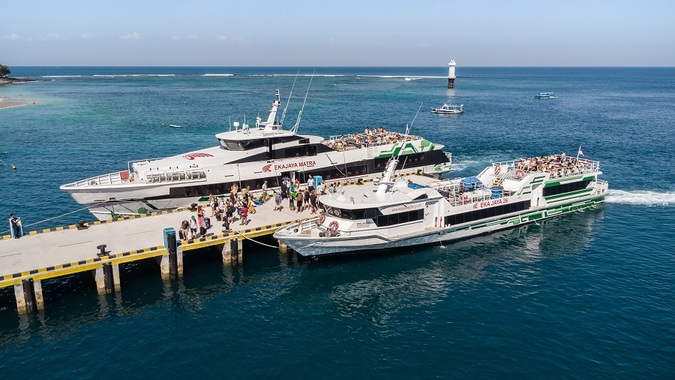
Understanding why Nusa Dua Harbour matters means understanding what it replaces.
A morning crossing from Padangbai to Lombok has always existed, and Ekajaya has run it reliably for over eighteen years. But for a guest checking out of a resort in Uluwatu at 5:30am, the ferry itself was the last hour of a much longer journey — one that began with a car through Bali’s morning congestion, continued through the narrowing east-coast roads, and ended at a terminal handling more daily crossings than its footprint was ever designed to accommodate.
For travellers who had chosen the south of Bali precisely for its calm, the pre-ferry drive undid that calm before the crossing had even begun.
What Changes at Nusa Dua Harbour
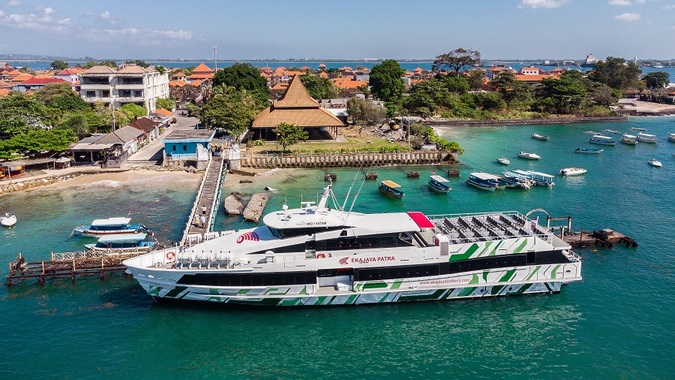
Nusa Dua Harbour is not a repurposed dock or a shared commercial pier. It is a dedicated fast ferry terminal, built exclusively for the Ekajaya fleet, and shaped by a single design principle: the departure should feel like a continuation of the resort, not a break from it.
A semi-outdoor pavilion — sheltered above, open to the sea breeze on all sides — replaces the enclosed anonymity of a conventional terminal. The ocean, the light and the sound of the harbour are drawn into the waiting experience itself. Boarding is choreographed rather than crowded, and the entire flow from arrival to embarkation is timed to the pace of a considered morning rather than the urgency of a commercial pier.
For guests staying in Nusa Dua, Jimbaran, Uluwatu, Kuta or Seminyak, the terminal is between fifteen and forty-five minutes by car, compared to ninety minutes or more to the traditional east-coast port. The difference is not just distance saved — it is the removal of the drive that used to sit between the resort and the sea.
Reaching the Islands, Without the Up-Coast Transfer
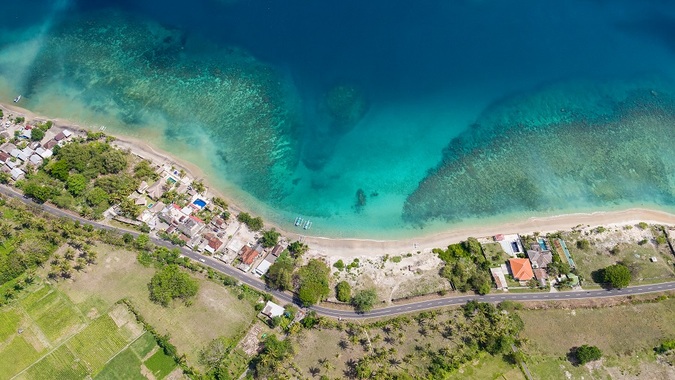
From Nusa Dua Harbour, Ekajaya operates regular daily departures across the archipelago, connecting South Bali directly to Nusa Lembongan, Nusa Penida, Gili Trawangan, Gili Air, Gili Meno, and the wider Lombok mainland, Senggigi and Bangsal — all without the pre-dawn transfer up-coast.
The Gili Islands are served as direct crossings from Nusa Dua Harbour, rather than via an onward transfer from mainland Lombok. Each vessel in the network is drawn from a fleet that has connected the Bali–Nusa–Gili–Lombok corridor for nearly two decades, including Ekajaya Patra, the newest addition to the fleet, launched into service in mid-2026. Each is BKI-certified (Biro Klasifikasi Indonesia, the country’s national marine classification authority) and covered by full Protection & Indemnity insurance.
The Wider Ekajaya Network
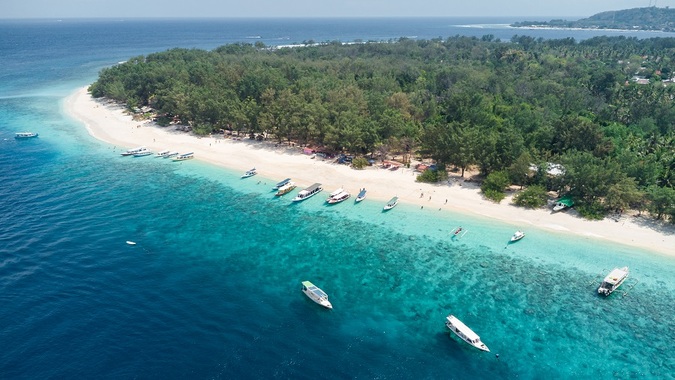
Nusa Dua Harbour joins an operating network of nine ports across the region, with the traditional gateway at Padangbai still active for guests approaching from central or north Bali. Together, the two harbours anchor a route map covering:
- Nusa Dua Harbour — the new South Bali gateway, direct to Lombok, the Gilis and the Nusa islands
- Padangbai — the east-coast gateway, serving the same destinations from central Bali
- Nusa Lembongan, Nusa Penida — daily crossings for day trips and stays
- Gili Trawangan, Gili Air, Gili Meno — direct crossings, no transit
- Bangsal, Senggigi — Lombok mainland ports
Across this network, Ekajaya operates with an annual capacity of up to 1.2 million guests.
Safety and Standards
Every vessel in the Ekajaya fleet is BKI-certified and covered by full Protection & Indemnity insurance. Life-jackets are stowed beneath every seat. Waterjet propulsion replaces open propellers. Each vessel is continuously monitored through an integrated control system. These are the standards that allow the crossing itself to be part of the holiday, rather than an interruption to it.
Door-to-Sundeck: The Shuttle Service
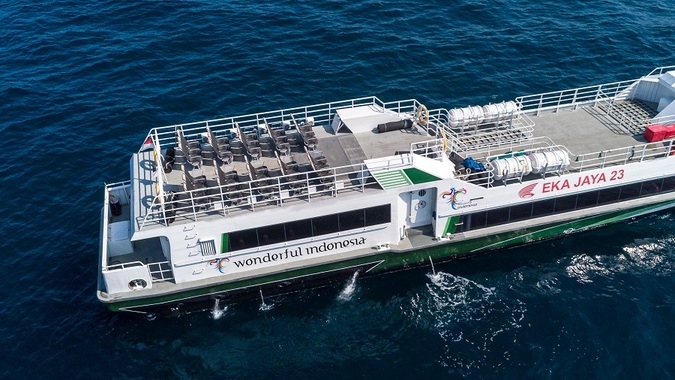
Completing the seamless journey, Ekajaya’s shuttle service meets guests at their resort entrance and connects them directly to their departure at Nusa Dua Harbour. Three options are available — Private Shuttle (up to 4 guests), Sharing Shuttle (up to 3 guests) and Private Max (up to 8 guests) — each timed to match ferry departures, with uniformed drivers and WhatsApp support throughout the journey.
Booking Your Crossing
All fast ferry bookings from Nusa Dua Harbour are made exclusively through the official Ekajaya website at ekajayafastferry.com. Live schedules for all nine operating ports, real-time availability, and the option to add a shuttle to any booking are all handled in a single checkout.
The Distance That Actually Changed
The islands are the same distance from Bali that they have always been. What has changed is the distance between your resort door and the deck of the ferry that reaches them. For anyone staying in the south of Bali, that is the distance that ever really mattered.

