

Menjangan: A Sensory Retreat with Marine Depth
Bali is often written through its visible enchantments – temple ceremonies, daily offerings, lushness, beauty carried in gesture and ritual. Menjangan Island belongs to another chapter of the same story. Here, tucked away at the north-western tip of Bali, the sacred feels less adorned and more elemental. It exists in the discipline of the preserved reef, in the patience of marine life, in the widening blue that asks the mind to stop performing and simply receive.
That, perhaps, is what drew me to Menjangan Island: the promise of retreat, not from the world entirely, but from its noise. To understand that silence has texture. That stillness can be expansive rather than empty.
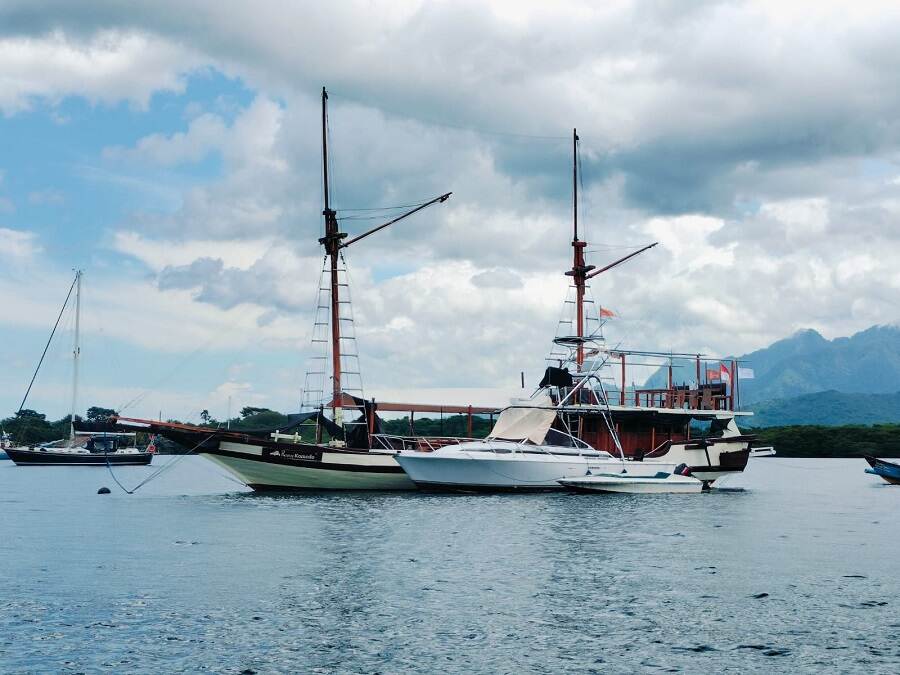
The first few minutes of diving belong not only to sight, but to sound – the intimate rhythm of bubbles rising through blue, as if the sea were gently teaching the body how to let go of noise. For a beginner, everything feels heightened: the heartbeat, the pressure in the ears, the coolness gathering around the skin, the quiet command to breathe steadily. Underwater, the body returns to itself. Sound narrows. Thought loosens. Time, relieved of urgency, begins to move differently.
That was my first impression of marine depth: not spectacle, but a subtle rearrangement of the senses. We explored three sites -Eel Garden, Pos II, and Bat Cave – and together they felt less like separate destinations than three ways of understanding stillness.
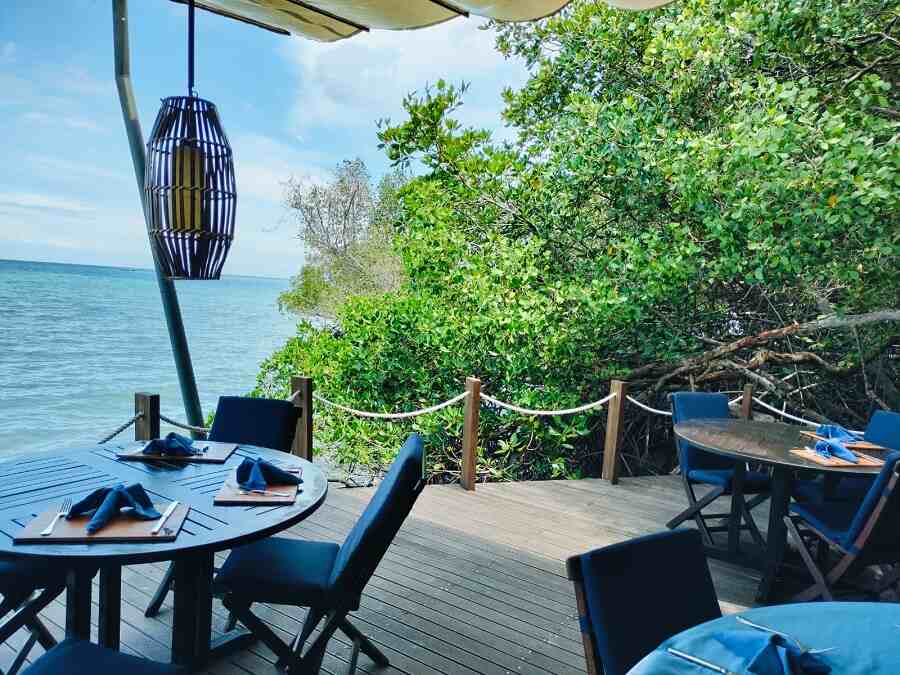
At Eel Garden, the reef opened with restraint. Beyond the coral, the seabed softened into a sandy stretch where garden eels rose delicately from the floor of the sea, swaying in the current like thoughts not yet fully formed. There was something tender about them, their movement both cautious and graceful, appearing and disappearing with a sensitivity that felt almost human. Around them, Menjangan revealed one of its quieter lessons: what is most beautiful is not always what is largest or loudest. Sometimes it is simply what asks us to look more patiently.
Schools of fusiliers and snapper shifted direction in sudden flashes, moving almost like one family, their bodies catching the light like scattered pieces of silver silk. Clouds of anthias hovered above the reef, while butterfly fish and angelfish slipped between hard coral formations and softer coral folds with unhurried elegance. Soft corals moved with a feminine fluidity, as though they were breathing with the sea rather than merely growing in it. There were bursts of yellow, electric blue, coral pink, rust orange, deep violet, and impossible greens – colours not arranged for spectacle, but scattered with the intuitive elegance of nature. I spotted a few octopuses – intelligent creatures that seem to think with their arms, reassembling itself and slipping away, reminding me that camouflage, too, can be a form of grace.
The eye moved from one tenderness to another: from the eels to the coral, from the coral to the flicker of reef fish, from movement to stillness, from the visible to the nearly hidden. The whole composition unfolded through nuance, colour, pattern, and the intimacy of paying attention.
That patience followed me to Pos II.
If Eel Garden felt delicate, Pos II carried a more composed elegance. The coral wall seemed to fall away with effortless authority, textured with colour and life but never chaotic. Here the reef is built not from one signature coral alone, but from a layered underwater tapestry: giant gorgonian sea fans, soft corals, hard coral formations, and barrel sponges that turn the wall into something between architecture and lace. At Pos II, this composition felt especially striking – giant gorgonian fans, one of Menjangan’s most iconic visual signatures, opened outward with quiet grandeur, while delicate coral trees and softer coral growth lent the reef both movement and colour. Floating there, I felt suspended between scale and softness, between awe and surrender. It was one of those rare moments when nature does not overwhelm you, but steadies you. The reef did not demand admiration. It simply existed in its own completeness.
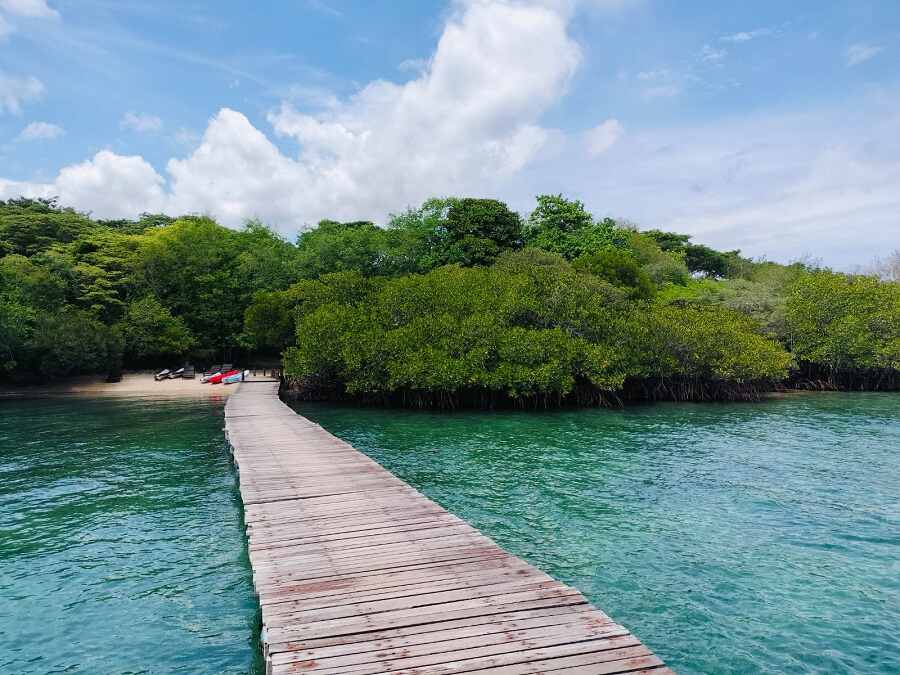
Further, the sense of marine depth became more pronounced. Schools of trevallies and larger reef fish gathered and dispersed in waves, turning all at once as though answering a music beyond human hearing. Even the blue beyond the wall seemed textured, not empty, but filled with possibility. Somewhere among those giant fans, I thought about pygmy seahorses – tiny camouflage masters that can hide inside such grandeur so completely that many divers never see them unless a guide points them out.
There is a humility that comes with drifting beside a wall like that. One realizes how quickly the mind wants to name, compare, classify, and move on. But Pos II resisted haste. It asked for a slower gaze. Lionfish, moray eels, nudibranchs, and even the occasional passing stingrays belong to Menjangan’s wider marine world, yet none of it felt performative. And suddenly, a small white-tip reef shark emerged from the wider blue – slender, grey-backed, and pale beneath, with a clean silhouette that seemed almost too precise for the softness of the reef. I froze for a few seconds, but surprised myself by not panicking. What rose in me instead was fascination more than fear – a brief, electric alertness, and the awareness of being very small inside something graceful, wild, and entirely self-possessed.
Then came Bat Cave, and with it another face of Menjangan.
Here, the light changed. It filtered differently, touching shadow, stone, and water with a quieter kind of intensity. The caverns and contours gave the dive a more mysterious character, not dark in any threatening sense, but cinematic, almost sacred. It carried the feeling of a place that keeps part of itself hidden, not out of distance, but dignity.
The colours here seemed deeper somehow, more shaded, more intimate. Silvery fish crossed the opening where the light entered. Darker contours of rock held pockets of life that only revealed themselves slowly. The water seemed cooler in feeling, simply because the shadows made the whole space more contemplative. Bat Cave did not invite excitement as much as reverence. It was like stepping into a chamber where the sea lowered its voice.
And then, as if the blue had been waiting for the precise moment when I was quiet enough to notice, there was a large mature turtle – perhaps a hawksbill, the reef-dwelling kind often seen foraging calmly for sponges and other life tucked into the coral. It fed at a close distance with complete calm, moving with the unhurried confidence of a creature entirely at home in its world, ancient and self-contained, shaped by a life measured not in urgency, but in tides, reefs, and return. We did not approach. We did not interrupt. We simply watched, near enough to feel its presence, but not to disturb its peace.
For one brief moment, our eyes met.
There was nothing theatrical about it. That is what made it unforgettable.
There was no emotion in it, no fear, only a kind of mutual understanding of silent and complete. It carried that rare quality one sometimes encounters in the wild – calm, confidence, and contentment without display. When it had finished, it turned with one effortless motion and slipped into the darker blue beyond the reef, as though flying deeper into an ocean open field.
I remember feeling, almost with a childlike ache, that it must be beautiful to move through the world like that — untroubled, unhurried, held by depth.
That was the true sensation of Menjangan for me. Not the thrill of diving, but the tenderness of being brought into another emotional climate. The mind, so often trained to anticipate, compare, and respond, is asked instead to soften. Menjangan held its magic in reserve – in the coral wall, in the widening blue, in the patience of marine life, and in the stillness that enters the body and stays there.
For those who live in public roles, who carry responsibilities, who shape decisions and words for others, there is something profoundly healing in entering a world where none of those matters. Beneath the surface, status dissolves. The ego becomes weightless. All that remains is the body, the breath, and the quiet grace of paying attention.
Maybe that is why Menjangan feels less like escape and more like return – and why the deepest luxury of a sensory retreat is not spectacle, but recalibration; not the need to chase wonder, but the grace of receiving it.

