

Living with the Rhythm of the Waves: The Shift Toward Authentic Bali
There’s a version of Bali that most visitors never see — not because it’s hidden, but because it hasn’t been built up enough to draw a crowd. Keramas Beach, on Gianyar’s southeastern coast, is one of those places: a black sand shoreline known mostly to surfers, still largely free of the density that defines Bali’s more familiar tourist corridors.
Further along the coast, neighboring Saba and the wider stretch toward Klungkung are quietly emerging as an alternative to Bali’s more crowded south — a part of the island still shaped more by daily life than by tourism infrastructure. It’s this untouched quality that shaped the thinking behind Keanu Residences, a new collection of 10 beachfront residences, recently presented exclusively at Bali Nexus in Ubud. Unlike much of what’s been built along Bali’s coastline in recent years, Keanu is conceived as a private, gated residential community — designed for owners who intend to actually live in their homes, not a short-term rental product dressed up as a residence.
The design was led by Charlie Hearn, founder and principal architect of Inspiral Studios, an award-winning architecture practice known for creating context-driven residential, hospitality and destination projects across Indonesia and internationally. The studio’s work has received international recognition, including the Prix Versailles Award and International Design Awards. The brief given to Charlie was less about maximizing a plot and more about designing something that could last for generations rather than a single trend cycle.
“It’s about improving people’s lives, about longevity — and it follows a lot of principles that bring people together,” Hearn said at the exclusive launch of Keanu Residences at Bali Nexus recently. “I think what we’ve managed to create together with the whole team is something that can really resonate with people that have a lust for life.”
Harmony and a Grounded Life
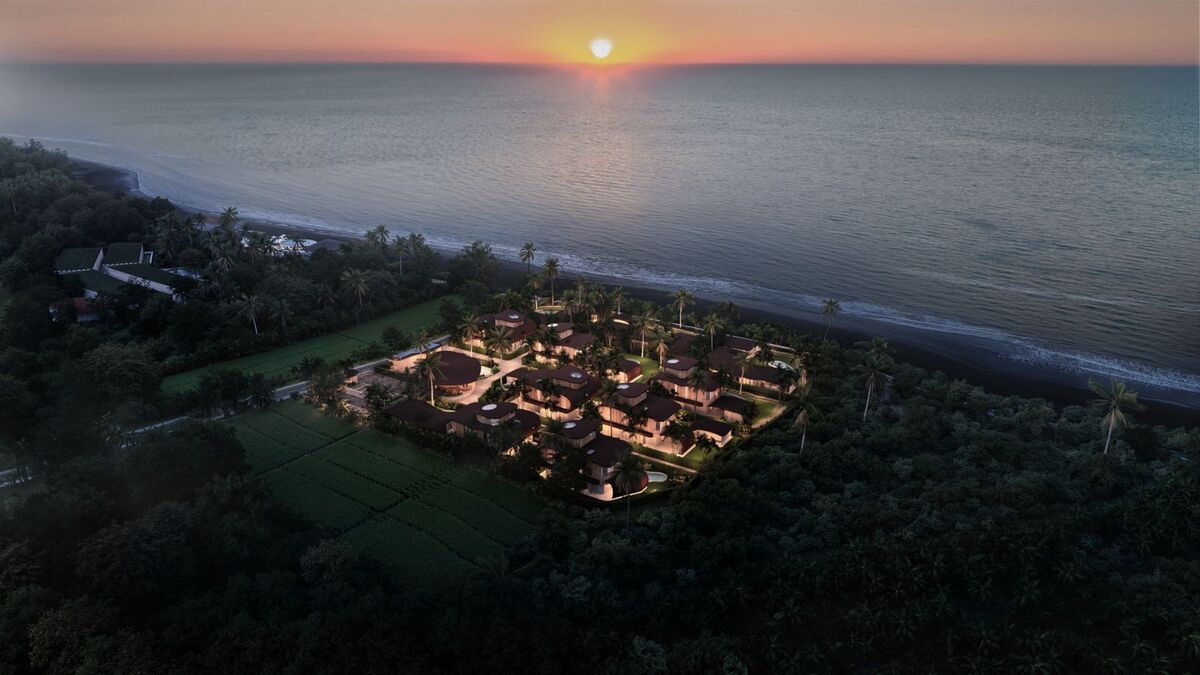
That intent runs through the design itself, which follows Tri Hita Karana, the traditional Balinese concept of harmony between people, nature, and the spiritual realm. In practice, Balinese architecture has long used this principle to guide everything from the orientation of a building to the placement of shared and private spaces — treating a home not as an isolated structure but as part of a wider relationship among its residents, the land, and the surrounding community.
“Maybe the forms aren’t what you’d typically call Balinese, but a lot of it’s about the materiality,” Hearn explained. “We’re using a complete set of local materials, and it’s about our connection to the natural world around us.”

