

Rote in the Season Nobody Sees
There was something alluring about travelling to the far southern edge of Indonesia, to a place surfers speak of with reverence during the right months and almost forget during the wrong ones. December is the latter. The season nobody sees. And perhaps that was the real invitation: to visit an island not at its loudest, but at its most unguarded.
The trip began in the kind of chaos that forces you to reconsider not just your travel plans but your capacity for patience. Kupang airport, swollen with Christmas travellers, felt like an overheated lung struggling to match the rhythm of the people surging through it. We left the airport for the harbour, surrendered to the city’s logic: if the sky wouldn’t let us go, maybe the sea would.
The road to get there wound through Kupang’s unfiltered life: honking minibuses, motorcycles darting into impossible gaps, vendors tapping on windows with plastic bags of peanuts, boiled corn, bottled water. And yes, we managed to reach Kupang’s harbour safely, a busy zone under tin roofs, restless wind where ticket counters operating on intuition rather than schedule, plus the smell of diesel and tide-bound fish synchronized. Boats ranged from slow wooden vessels that looked handmade decades ago to government ferries slapped with new paint but carrying old stories beneath their hulls.
The boat we boarded was functional rather than reassuring: modest plastic seats, open windows that welcomed every gust, and an engine that hesitated before accepting the day’s work. The crossing was rough enough to reduce the boat to its essentials – movement, spray, vibration. Conversations died quickly; people focused on breathing evenly, gripping seat edges, watching the horizon rise and fall like a slow, unpredictable lung. By the time Rote appeared – low hills, lontar palms, and long quiet beaches – it felt like a place that had intentionally dimmed its lights for the season. A hope.
The Edge of the Map
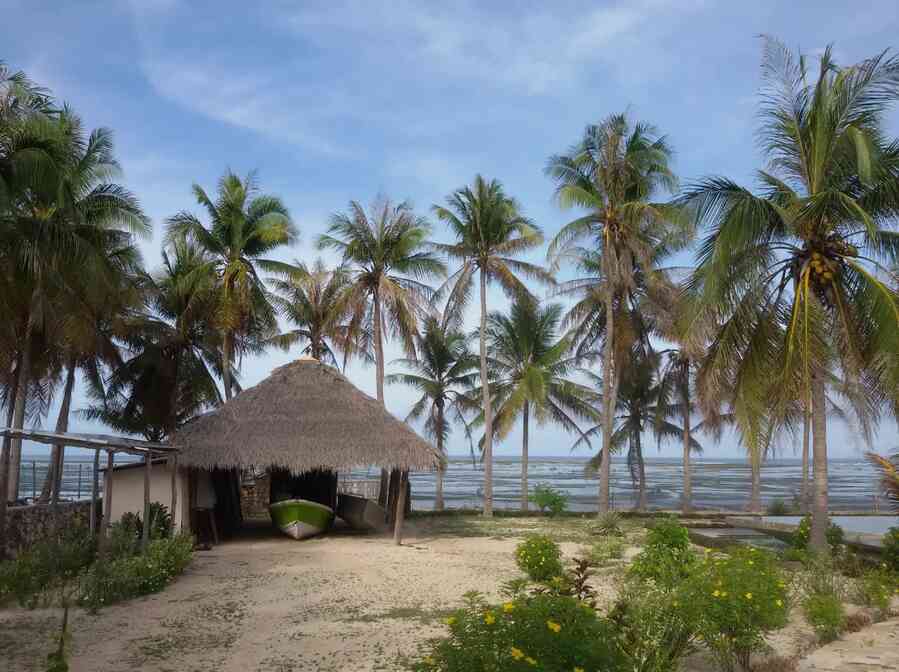
We stayed on the western coast near Nemberala, a shoreline known in the surf world for its long breaks between May and September. It revealed itself not as a destination but as a threshold – the point where the island’s outer world collides with its inner rhythm. In the surf season, this coastline becomes a living atlas of accents and salt-stiff hair: Australians chasing T-Land, the famously long left-hand reef break revered for its unspooling precision; French long boarders drifting toward Boa, where the wave bends into mathematical elegance; a community of expatriates whose lives revolve around tides, wind patterns, and the discipline of the ocean.
But in December, when the winds turn and the waves lose their shape, the village settles into a quieter rhythm – one shaped not by surfboards but by the routines of local life.
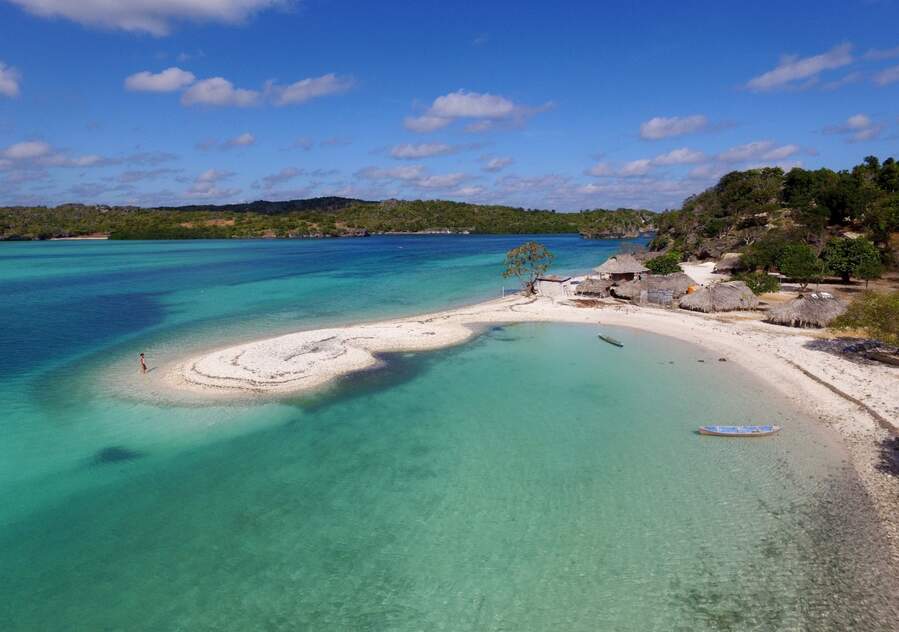
The cafés close early, the board racks stand barren, and the surfers migrate home for the holidays. The expats who usually animate the landscape slip away, leaving behind their quiet architecture – solar huts, bamboo eco-lodges, and wooden houses raised lightly on stilts as though the structures themselves had chosen to stay and listen for the returning waves.
In their absence, the coastline rearranges itself. The sea softens, the reef quiets, and the land exhales. Without the constant hum of surf tourism, Rote begins to reveal a different kind of beauty, subtle, unhurried, almost shy. This was the Rote we had come to know: the island in the season nobody sees. Without the usual surf crowds, the coast feels different, but not empty. Instead, it becomes easier to notice the details.
Mangroves, Myths, and Water That Watches
From the softened coastline, we moved inland, where Rote speaks in older vocabularies; roots, tide, breathe. Canoeing through the Dodaek mangrove labyrinth near Oeseli felt like entering a world before language. The mangrove system here stretches wide across the southern inlet, one of the island’s most vital ecosystems – its roots gripping the earth like ancient fingers holding the shoreline together.
Massive trunks rose into vaulted canopies, turning the waterways into natural cathedrals; the water beneath us was so clear it felt like paddling over glass. In these channels, clarity is not just beauty – it is survival. The mangroves filter salt, trap sediment, and shield the island from storms. Every root is doing quiet, essential work.
Shadows lengthened across the waterways, the air pressed close, and sound dissolved into a kind of suspended quiet.
Deeper into the mangroves, the silence changed quality. It grew denser, almost aware. Every ripple looked like a question. Every shadow felt intentional. It was not fear we felt, but an older emotion, something between reverence and being evaluated by the landscape itself.
What People Carry, and What the Island Teaches
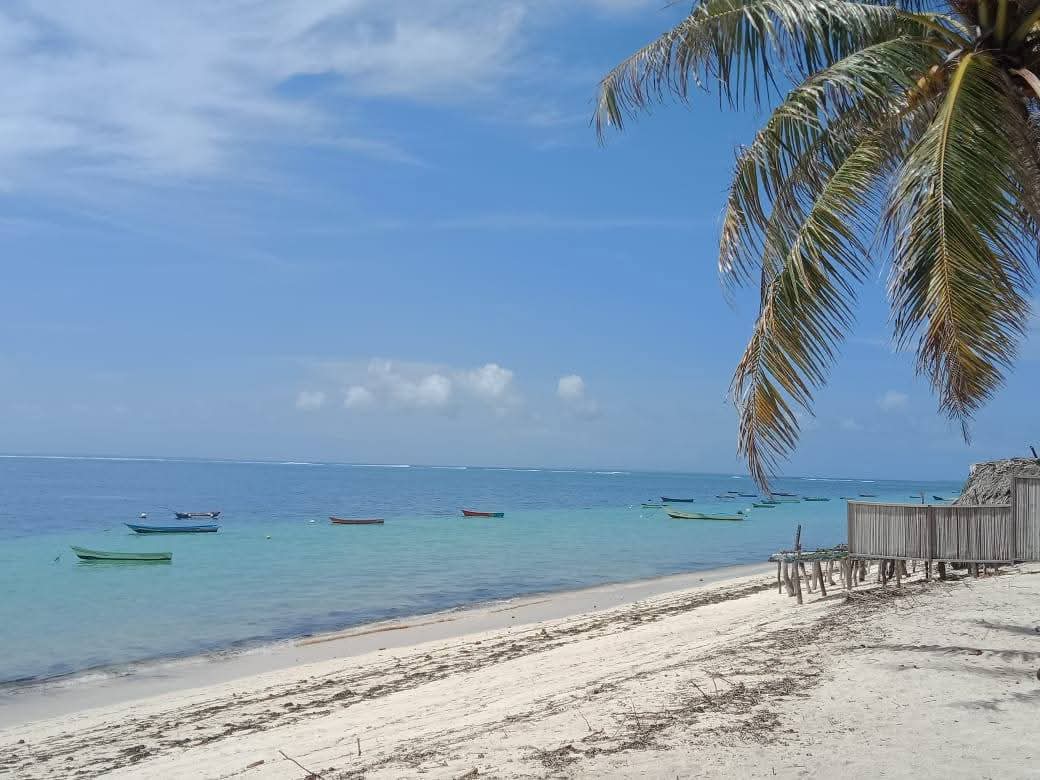
Away from the water, life continued at human scale. Seaweed farmers moved through the shallows like metronomes – their gestures shaped by tides, seasons, and the kind of repetition that turns work into pulse. Without tourists watching, there was a quiet dignity to their movements, as though the ocean and the people who lived beside it had agreed long ago to mirror each other’s patience.
Under the shade of a lontar tree, a woman unfolded tenun ikat Rote. The cloth felt alive – dyed with noni root and iron mud, patterned with horses, spirals, and geometric guardians that trace clan identity and ancestral protection. Here, weaving is not a craft but a cosmology. It appears at weddings and funerals, in church rituals and family alliances, marking moments when life requires memory. Holding her weaving felt like holding a soft map of the island’s lineage.
Rote’s culture, too, holds its own quiet rituals. In the late afternoon, men often gather beneath those same lontar palms, sharing sopi lontar, the traditional distilled spirit made from palm sap. It is strong, smoky, and passed in a single cup – an offering that travels hand to hand with respect rather than urgency. Sopi is never about indulgence; it is a conversation, a confirmation of trust, a way of acknowledging each other without the need for many words. The lontar palm feeds, shelters, and intoxicates – earning its name as the island’s “tree of life.”
Beliefs flow through daily life with the same subtlety. People speak of ancestor spirits who watch over land and sea, of certain trees that should not be cut, of stretches of water approached with inherited caution. These are not superstitions but ways of maintaining balance in a landscape where the human world and the natural world negotiate constantly for space.
What Remains
When we returned to Kupang, the city seemed louder than before—honks sharper, shouts brighter, the familiar chaos suddenly full of texture. But I carried Rote with me not as a postcard but as a recalibration.
Some islands dazzle.
Rote withdraws.Some islands entertain.
Rote observes.Some islands try to impress.
Rote waits—especially in the season nobody sees.
And in that waiting, in that quite carved by absence, the island offered something unexpected:
a way back to myself, shaped not by spectacle but by stillness.

