

Trekking East Hokkaido: Japan’s New Frontier
Japan has always been a walker’s paradise. From the ancient Nakasendō trail linking Kyoto and Edo to the pilgrim paths of Shikoku, the country’s landscapes have long been best understood on foot. Now, a new route in Hokkaido is drawing attention among seasoned hikers: the East Hokkaido Trek, part of the recently established Hokkaido East Trail.
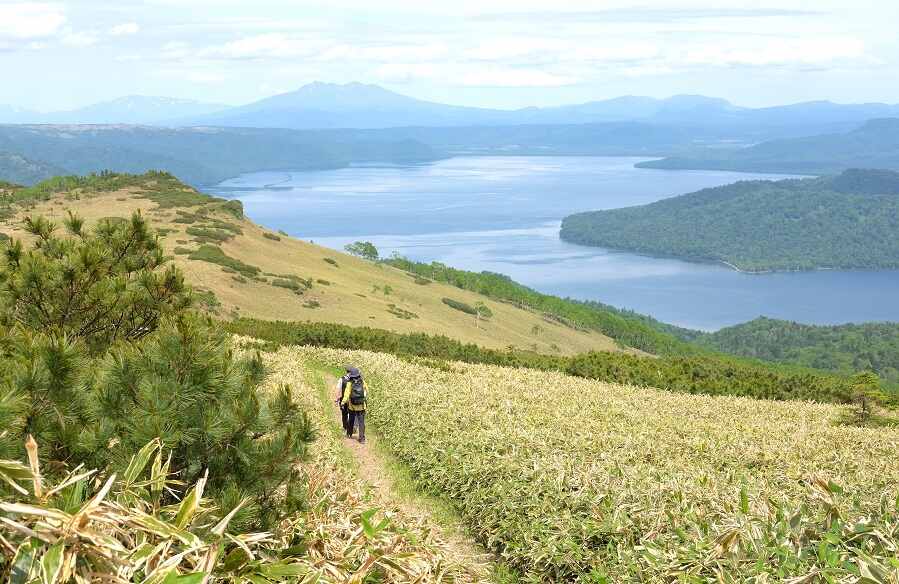
Stretching some 410 kilometres across Japan’s northernmost island, the trail threads together three national parks and offers a journey through terrain that feels both raw and elemental. It begins in Kushiro, where vast wetlands ripple with reeds and cranes, a Ramsar‑listed site that is one of Asia’s great ecological treasures. From there, walkers move through volcanic landscapes, crater lakes, and lowland forests before reaching the Shiretoko Peninsula, a UNESCO World Heritage site often described as Japan’s last true wilderness.
The trek is not for the faint‑hearted. Daily distances range between eleven and eighteen kilometres, with paths that climb over mountain passes, skirt steaming volcanoes, and cut through remote farmsteads. At Atosa‑Nupuri, known locally as Io‑zan, the earth itself seems alive, constantly venting sulphur and steam. Nearby, Kawayu Onsen offers respite, its geothermal baths long prized for their restorative qualities.
Two crater lakes, Kussharo and Masshu, punctuate the journey with vast expanses of water framed by volcanic peaks. Kussharo is so large it contains an island that is itself a volcano, while Masshu is famed for its clarity, often described as one of the clearest lakes in the world. These landscapes are not just scenic backdrops but living geological stories, reminders of Hokkaido’s restless earth.
The final stretch to Shiretoko is perhaps the most dramatic. This peninsula juts into the Sea of Okhotsk and remains sparsely populated, home to brown bears, sea eagles, and rugged coastal cliffs. It is a place where wilderness still feels untamed, where the human footprint is light and nature dominates. For walkers, reaching Shiretoko is less about ticking off a destination and more about arriving at a frontier, a reminder of how rare true wildness has become.
Beyond the landscapes, East Hokkaido offers cultural and sensory rewards. The island’s cuisine is among the freshest in Japan, with seafood from the cold northern waters and produce from fertile volcanic soils. Evenings often end with onsen bathing, a ritual that blends relaxation with tradition. Accommodation along the way is simple but comfortable, reflecting the region’s understated hospitality.
What makes this trek particularly timely is its climate. While much of Japan swelters in summer, Hokkaido remains cooler, making June through October an appealing window for long walks. For travellers seeking respite from humidity, the northern air is a welcome change.
The East Hokkaido Trek is more than a new itinerary. It is part of a broader movement to open up Japan’s lesser‑known regions, encouraging exploration beyond the well‑trodden routes of Honshu. This activity represents a chance to see Japan differently: not through temples or neon skylines, but through wetlands, volcanoes, and wilderness. It is a reminder that Asia’s treasures are not only cultural but also ecological, and that sometimes the best way to understand them is simply to walk.
 By Kurtis Lee
 Wonderful Indonesia Showcases “Go Beyond Ordinary” Tourism Promotion at Sitf 2026 in Seoul
