
A Sip of Kyoto
There are few experiences in Japan that feel as timeless and quietly profound as the tea ceremony, and nowhere does it resonate more deeply than in Kyoto. This ancient city, once the imperial capital, is still the beating heart of Japanese tradition. Walk its narrow lanes, past wooden machiya townhouses and moss‑covered temples, and you’ll soon stumble upon a teahouse where the art of chanoyu is still lovingly practiced.
Kyoto is home to the three main schools of tea ceremony, and whether you’re visiting in the blush of cherry blossom season or under the fiery maples of autumn, the ritual feels almost mystical. Step inside a tatami‑lined tea room and the world outside seems to fade. The kettle hums softly, steam curls into the air, and time slows to the rhythm of the bamboo whisk.
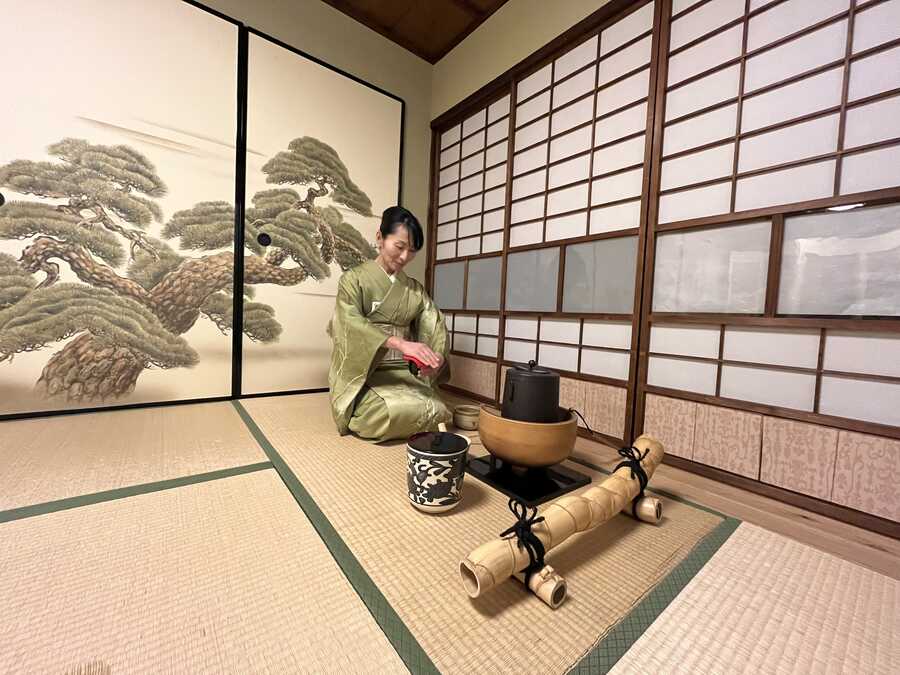
At first glance, the tea ceremony might seem simple: a bowl of matcha whisked to a frothy green, served with a sweet to balance its earthy bitterness. Yet beneath that simplicity lies a ritual layered with meaning. Every gesture, from the way the host folds the silk cloth to the precise turn of the tea bowl, is deliberate. It’s a choreography of hospitality, designed to create a moment of harmony between guest and host.
Tea first arrived in Japan from China in the early centuries, introduced by Buddhist monks who used it to aid meditation. By the thirteenth century, tea drinking had spread among aristocrats, becoming a symbol of refinement and learning.
The real turning point came in the sixteenth century with Sen no Rikyū, the legendary tea master. He stripped away the fuss and focused on simplicity. For him, beauty was found in the imperfect: a rustic clay bowl, a bamboo whisk, the quiet hum of a kettle. His philosophy, rooted in Zen, turned the tea ceremony into something deeper — a way of appreciating life’s fleeting moments.
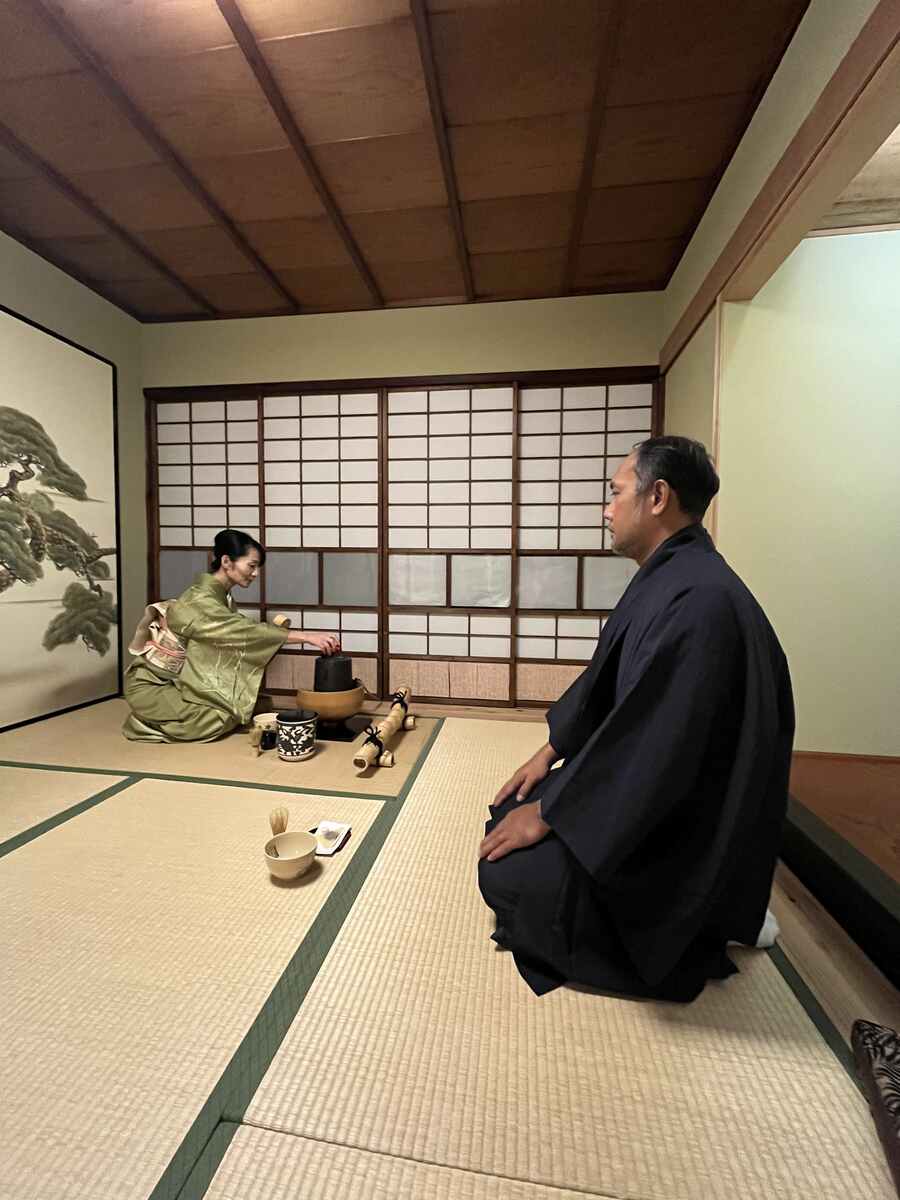
From this foundation, the tea ceremony became a way of welcoming guests with grace and sincerity. The host prepares the tea with precise movements, folding cloths, rinsing utensils and whisking the powdered green tea until it froths. The guest receives the bowl with respect, turning it slightly before drinking, acknowledging the care that has gone into its preparation. Every step follows an established order, yet the purpose is not rigid formality. It is about creating a shared moment of beauty, a fleeting pause in the rush of life.
The ceremony also reflects the Japanese idea of ichigo ichie, meaning “one time, one meeting.” Each gathering is unique and will never be repeated in exactly the same way. This awareness of transience encourages participants to savour the present, to notice the sound of water boiling, the fragrance of tea leaves, and the feel of ceramic against the hand. It is a gentle reminder that life itself is precious and impermanent.
Today, the tea ceremony continues to be practised across Japan, taught in schools and preserved by tea houses. It remains a symbol of hospitality and cultural identity, bridging past and present.
Kimono Tea Ceremony MAIKOYA Nishiki
Address: 329 Ebiyacho, Gokomachidori Sanjo sagaru, Nakagyo-ku, Kyoto, Japan
Website: www.mai-ko.com/culture/tea-ceremony

